Secret Intelligence Service
.
ARCHIVE
Document : Al-Muhajiroun and the 7/7 Terror Attacks. London
Fifty per cent of terrorist attacks carried out or plotted in the United KIngdom involve members of the banned extremist network Al-Muhajiroun, which has been linked to the 7/7 London bombings and to the murder of Army drummer Lee Rigby.
Banned since 2010, Al-Muhajiroun has been implicated in numerous atrocities and plots since 1997.
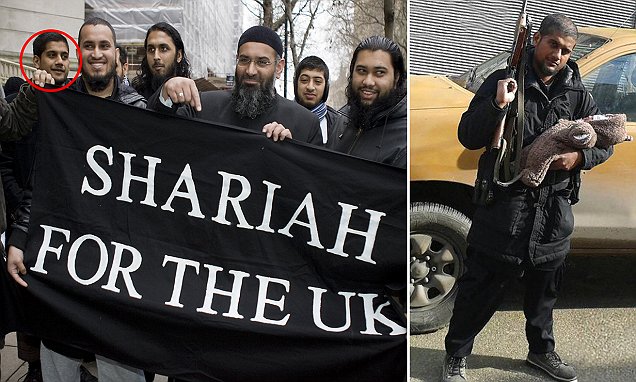
Abu Rumaysah ( back far left – ID confirmed by Chris Greenwood ) Anjem Choudary Of Islam4Uk, seen with supporters on Millbank in central London, After Giving A Press Conference At Millbank House. (Photo by John Phillips/UK Press via Getty Images)
Al-Muhajiroun was founded in the 1980s and was headed by radical Islamist Anjem Choudary. Al-Muhajiroun has been a foundation for Islamic extremism in the UK. Research indicates that fifty attacks and plots perpetrated or planned in the UK, Al-Muhajiroun was linked to at least twenty-three of these.
These are not societal recluses or down and outs by any means because certain have been involved in serious gang activity and/or crime and end up discovering this as a form of conversion.
Not untypically certain of the higher positioned figures are captivating people, who are adept at drawing others toward them and in the process initiating indoctrination procedures consisting of extremist ideas.
“These are people very proficient in dwelling at the periphery and in the background without ever having their hands on the device or being directly implicated in terror plots, which would see them arrested, convicted and given heavy sentences.”
Numerous high-profile terror attacks in the U.K. have been inspired by the Al-Muhajiroun. In 1997, a member of Al-Muhajiroun attacked a police officer at a rally.
At least one of the bombers who carried out the 7/7 2005 London bombings, which killed fifty-two people had met with Omar Khyam, a key exponent of Al-Muhajiroun.
Michael Adebolajo and Michael Adebowale, who murdered Army drummer Lee Rigby, in broad daylight in Woolwich, in 2013, had both attended events organized by Al-Muhajiroun.
Members of Al-Muhajiroun recruit outside mosques in less salubrious parts of the U.K
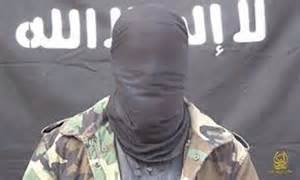
Al-Muhajiroun has been associated with an 04/2003 bombing in Tel Aviv, a 2006 blast outside an army barracks in India and a plot in 2003-2004 to detonate fertilizer bombs at various targets in the city of London.
Brustholm Ziamani, 19, who has been linked to Al-Muhajiroun, was sentenced for plotting a Lee Rigby-inspired attack on a soldier in the UK. During his trial at the Old Bailey, it was revealed that Ziamani had been radicalized by members of Al-Muhajiroun, who gave him clothes and residence. They recruited, mentored and radicalized an homeless eighteen year-old youth.
Al-Muhajiroun was founded by the Syrian-cleric Omar Bakri Muhammad, who was expelled from the U.K. in 2005.
The group changed its name to get around the law. Consequently the group re-emerged several times under different cognomens such as; Islam4UK and Need4Khalafah, having been banned for being judged radical and extremist tendency.
The government outlawed Al-Muhajiroun and its derivative Islam4UK, in 2010, under the Terrorism Act 2000. Overall, all 10 pseudonyms were outlawed by the Home Office between 2006 and 06/2014.
09/2014 police arrested nine men in London on suspicion of being members of Al-Muhajiroun and supporting terrorism. The suspects included Anjem Choudary, one of the most high-profile extremist Muslim preachers in the U.K. and once the leader of Al-Muhajiroun.
01/2015 several Muslim protesters who belong to proscribed Al-Muhajiroun were issued with ASBOS (Anti-Social Behavior Orders) prohibiting them from continuing activities of; engaging with a group using a a megaphone, or where items are set alight, or flags larger than two meters being displayed.
.
Appendix I. 7/7 Bombings. London
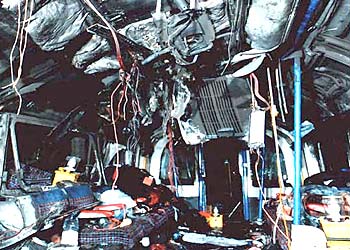
The 07/07/ 2005 London bombings (referred to as 7/7) were a series of coordinated suicide bomb attack perpetrated in central London and which intentionally targeted civilians using the public transport system during the morning rush hour.
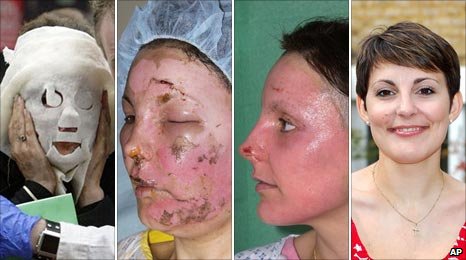
On the morning of 07/07/ 2005, four Islamist extremists separately detonated three bombs in quick succession aboard London Underground trains across the city and later a fourth on a bus in Tavistock Square. Fifty-two civilians were killed and over 700 more were injured in the attacks, the United Kingdom’s worst terrorist incident since the 1988 Lockerbie bombing, as well as the country’s first ever suicide attack.
The explosions were caused by homemade organic peroxide-based devices packed into backpacks. The bombings were followed two weeks later by a series of attempted attacks that failed to cause injury or damage. The 7/7 attacks occurred the day following London’s success in its bid to host the 2012 Olympic Games, highlighting the city’s multicultural reputation.
.
Appendix II. 7/7 Bombings. London
Explosions 7 July 2005 in London, as it was
10 years ago in the heart of London suicide bombers detonated in their backpacks explosive devices.
As a result, 52 people died and hundreds were injured. This attack was the biggest terrorist attack in the history of Britain.
What happened July 7, 2005. We have restored the chronology of events fatal for the UK and London day.
EXPLOSIONS
Suicide bombers set off at 04:00 am. London time.
30-year-old Mohammed Sidik Han, 22-year-old Shehzad Tanver and 19-year-old Jermaine Lindsay drove from Leeds to Luton in a rented car. There they were joined by 18-year-old Hasib Hussain, after which the group boarded the train bound for London.
As a result, they exploded four bombs, three in the subway and one – in the bus.
Explosion at Edgware Road: six killed
Three bombs exploded shortly before 08:50 am in the subway trains, pulled away from the station, King’s Cross
The ringleader of the group, Mohammed Sidik Han brought an explosive device by a Circle Line train, heading towards the station Paddington. The bomb exploded at the station Edgware Road in the second car. Six people were killed.
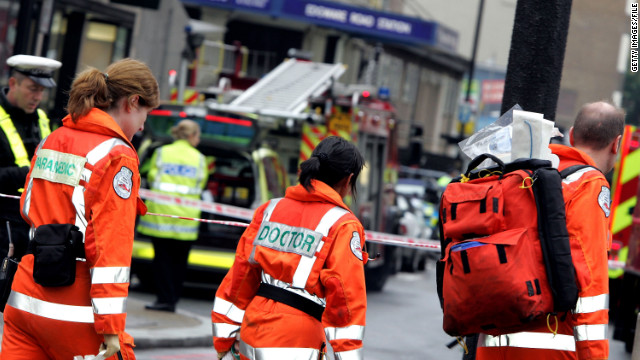
In 2011, during the investigation it was found that although the bomb exploded at 08:50, rescue services were able to get to the station only at 09:12.
At the inquest, witnesses told of the terrible picture as presented to them in the first minutes after the explosion, but also examples of courage and heroism of the people.
Daniel Biddle, was seriously injured in the blast, said he saw a big white flash.
The explosion at the station Aldgate : seven dead
Shehzad Tanver powered device to Circle Line train between stations Liverpool Street and Aldgate. The explosion occurred at the end of the second car, killing seven people.
Philip Duckworth, who survived, was so close to the bomber that was blind in one eye because of the fragments.
The explosion at the station Russell Square: twenty-six dead
Most people died at part of the Piccadilly line between the stations Kings Cross and Russell Square.
Jermaine Lindsay detonated an explosive device in the first car of the train crowded shortly after the departure from the station Kings Cross. Killed 26 people.
Paul Glennerster able to jump out of the car, despite the severe wound in the leg.
The explosion at Tavistock Square: thirteen dead dead
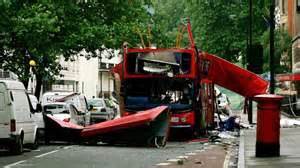
The youngest suicide bomber – Hasib Hussain – detonated a bomb in a double-decker bus at Tavistock Square, not far from the station Kings Cross. He killed 13 people.
The fourth and final account of the explosion occurred at 09:47, about an hour after the first explosions.
Surveillance cameras recorded as Hussein walked into the station Kings Cross, after the occurrence of the first three explosions. He tried in vain to get through to friends.
Bus number 30 – in front of the British Medical Association, which at the time a conference was held. Although during the first few minutes was not sufficient medical equipment, physicians were able to use their professional experience to save lives.
The bus driver George Psaradakis said he also began to help the victims. “I was shocked to see my passengers in such a state. I was stunned,” – he said.
Appendix III. The 7/7 Bombings. London
A decade on from 7/7, when Islamist suicide bombers killed 52 people on London’s transport network.
David Vidicette first heard of the July 7 attacks on television in his virtually empty office at a Scotland Yard satellite station on Clapham Road. Innocuous reports suggested a power surge had taken place on the London Underground.
At the time David knew no better – though he thought it odd, having never heard of a power surge on the Tube before.
He continued to work at his desk until a short time later it was reported there had, in fact, been multiple surges. By around 11.oo hrs, the surges had been confirmed as bomb blasts.
Shortly before 9,oo hrs, three suicide bombers had detonated explosives on the Underground in quick succession.
These were followed, an hour later, by another explosion in Tavistock Square, which tore through an iconic red London bus.
Though Videcette did not know it at this stage, 52 civilians and 4 bombers had died, and more than 700 people had been injured.
For the average citizen, the scale and horror of 7/7 was disorienting. Vidicette, a Metropolitan Police anti-terrorism officer, found himself thrust into the center of the most savage terror attack in modern British history.
The attacks came at the worst moment for Vidicette’s colleagues, when most of the anti-terror team’s officers, vehicles and resources were away at the G8 summit being held in Scotland, leaving a skeleton crew of sorely under-equipped staff in the capital.
The things he saw that day, and the subsequent investigation, would shape his life for the next five years and beyond.
First response
Despite a scarcity of resources, and the explosive emergence that day of a new kind of terrorism, the first responders pulled together well, Videcette said.
In his view, the issue was not so much the efficiency of the response but rather the timing of the attacks.
His first move was a practical one. With most of the counter-terror team’s vehicles in use at the Gleneagles summit, Videcette crossed the road from his office to the forecourt of a car rental firm and hired a fleet of vehicles to get his personnel mobile.
Infrastructure, too, presented new, untested obstacles.
“In terms of our biggest problems – one of these was the mobile phone network. The number of calls meant it became totally overloaded and this caused massive difficulties for all concerned; something that just hadn’t been foreseen before the bombings.”
Aftermath
Scenes of carnage at Tavistock Square, where a bomb blast tore through a double-decker bus killing 13, provided Videcette with some of his most troubling and lasting memories of the day.
After assisting in the search for evidence, which involved lines of officers meticulously combing the circumference of the blast area, picking up every tiny fragment of debris, he headed back to Scotland Yard.
“Traffic was at a standstill. There were hundreds of people walking on the pavements as there was no public transport.
“There was a man and woman walking along the pavement by Regent’s Park. I saw them strike up a conversation and they started talking and laughing. It was a lovely thing to see. Amongst the doom and despair – Londoners wouldn’t be beaten.”
That day would drag Videcette in “the biggest criminal investigation this country had ever seen.”
“We were swamped with more than 50,000 exhibits. There was so much information and there were so many avenues. It took over five years of my life – I know I gave the best that I could have given.”
Counter-terrorism since 7/7
7/7 prompted a sea change in how the UK conducts counter-terrorism operations. There are distinctions between IRA attacks of the Troubles era and this newer Islamist terrorism.
Unlike the IRA, the new breed of terrorist has no interest at all in avoiding the backlash that accompanies civilian deaths.
“Mass killings of civilians were, to a large extent, criticized from within the [Irish] republican movement.”
“Republican terrorism was reasonable easy to penetrate and the terrorists reasonably easy to profile. Warnings were often given.”
The Islamic extremist threat seeks to maximize terror by targeting civilians.
Islamic terrorism is harder to interdict or disrupt.
“There is no one single pathway to radicalization, nor is there a predictable psychological profile of an Islamic terrorist, nor is there a predictable ethnic, social or gender profile of an Islamic terrorist.”
“There is an unpredictability in the choice of target, methodology and attack planning. Civilians, including women and children, are targets.”
Lessons
What is lacking is a coherent grasp of what terrorism involves, and one which recognizes that civil liberties are of paramount importance.
“I do not believe that there is a sinister plot for the security and intelligence services to gain unlimited access to all our means of communication, but I do believe that they are adopting an all-embracing ‘just in case’ approach.”
In John’s view, the main lesson of 7/7 is chilling and of continuing relevance.
“It can, and will, happen here,” he said. “The perpetrators can and will be UK-born and bred.”
“The great British public and its institutions cannot be guaranteed 100 percent security, no matter how repressive the legislation or security measures.”
Secret Intelligence Service
Adversitate. Custodi. Per Verum