Discussion
Regarding the Life of Patrice Lumumba
What is the Essence of an ‘Enduring Character’ and does Lumumba fit the definition, if so why and by who?
Is the discussion meaningful / relevant, if so, how is it and to who and what?
.
.
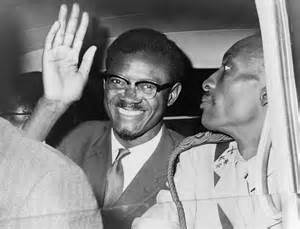
Patrice Lumumba (1925 – 1961)
.
WHAT IN ESSENCE IS THE NATURE OF AN ‘ENDURING CHARACTER’?
Regarding ny propaganda / information campaign; what is it about the ones who are enduring? Can we via understanding, commandeer their effect, or part thereof? Is it merely that the ones who try to change history hold fast certain moral imperatives, and are dismissed as idealists for so doing by those who are accused of not seeing beyond the limits of the practical, no matter how the world around them has become? Is this dichotomy valid? Oftentimes, these enduring characters are now seen as ‘imperialists’, ‘revolutionaries’ who do succeed, though most often throughout history they do not. These enduring characters often vanish in the mist of time’s passing into which they are forgotten, where their names and deeds are erased. We know this from our own example. To me, they all, whether forgotten or not, appear to carry within themselves a very curious mixture of hope, defiance and submission and an understanding of the meaning of the ultimate character of human existence. Without doubt, and like our own example, it is that they know the enormity they face; they know that the cost may well be their lives. Perhaps some grasp that things will turn out well, it is the certainty that something does make sense to them, regardless, whatever the outcome. This does make them interesting to consider, nonetheless. Whether useful to us, is open to scrutiny.
.
On January 17th. 1961. Patrice Lumumba, the Prime Minister of the Congo, was assassinated. As an investigatory exercise, it is pertinent to ask, why and what were the circumstances? This is a reply to a question asked us.
Patrice Lumumba, is by name associated with the Peoples’ Friendship University, in Moscow. To many older generation Russians, Lumumba is traditionally considered as being a friend of the USSR. So who was this man? In February 2014, Belgium admitted responsibility for the murder of the Congolese leader, Patrice Lumumba, which took place forty years ago. This was stated by Belgian Foreign Minister, Louis Michel, during a parliamentary debate on the results of a special investigation. The Minister stressed that it was a ‘moral responsibility’, expressed in individual officials gross indifference to the fate of Lumumba.
The Belgian Congo, probably the only country in the world in the twentieth century being the personal property of one man, the king of the Belgians, Leopold II. Only in 1908, giving in to world public opinion, the monarch agreed to sell the Congo to the Belgian Government. But the change did not affect the status of the slave position on rubber and the resplendently augmented sovereign. It is in the Belgian Congo that the author, Joseph Conrad found the prototype of the hero of his novel, ‘Heart of Darkness’, Kurtz, who in the film by Francis Ford Coppola’s ‘Apocalypse Now’ found new life in the performance of Marlon Brando. It is fair to say that in the neighbouring French Congo and Cameroon (a German colony), where also in the humid equatorial forests where rubber is grown, regimes were no more pleasant. The blame lying with the invention by the Irish veterinarian John Dunlop, who in 1890 invented the inflatable bicycle tire and who did not anticipate the rise of the automotive era and concomitant dictate of the industry upon rubber cultivation.
On June 30th, 1960, the inauguration of independence of the Belgian Congo in the capital Leopoldville was granted by King Baudouin of Belgium. He appealed to members of the Congolese Government with a paternally patronising speech. In tone he stated that the newly elected president, a veteran of the liberation struggle, was Joseph Kasavubu. Subsequently, there was a further speech delivered and which greatly angered the King and given by a young, bearded spokesman, wearing spectacles and a bow tie. This talented spokesman threw accusations in the face of the colonists and promised his countrymen that the Congo would never become a mere raw materials attachment of the West. According to eyewitnesses at the time, this speech sealed the fate of the first performance of the legally elected head of the Congolese government. The speaker was Patrice Lumumba.
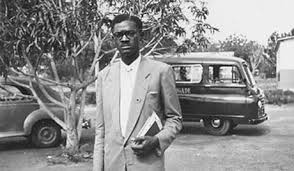
By the standards of the country, Lumumba was an intellectual. He was educated at a missionary school, worked as a post office clerk, and became a union activist, finally, a professional politician, the leader of the radical nationalists. Lumumba was a brilliant orator, had organisational talent and irresistible charm. He was intolerant of criticism, and his radicalism led shortly after winning his party’s Congolese National Movement, in the first election in May 1960 to a split in the leadership. Following the elections, Lumumba was appointed prime minister and formed a coalition cabinet. However, in the province of Katanga, where situated are the main natural resources of the Congo, and where more than a third of the population were immigrants from Europe, the nationalists lost. However, they refused to enter the local government, led by Moise Tshombe, whose party, Konakat, enjoyed the support of the white population. In the capital of Katanga, Elizabetville.
Subsequent events. The Belgian government sent an infantry battalion to Elizabetville, together with a platoon of Marines. Already in July, with the blessing of Brussels, Tshombe declared secession of Katanga from the Congo.
Katanga, a geological sensation, it was so described during the late 19th century, by the Belgian researcher Jules Korne. By virtue of the richness of its interior, where 80 percent of the uranium for which were made the bombs dropped on Hiroshima and Nagasaki, had Congolese origin. In the mid 1950s the country ranked fourth in the world in terms of production of copper ore. Cobalt mined in Katanga, was 75 percent of world’s production.
Lumumba was aware that without a rich Katanga in the Congo there was no chance to stand up. Meanwhile, the example was followed by the South Katanga diamond province of Kasai. Parallel chaos grew in Leopoldville, leading to aggravated contradictions between the president and prime minister. Lumumba decided on extreme measures and imposed martial law for six months, closing opposition newspapers and arresting the most hardhearted political opponents. He turned to the Soviet Union for military aid and received it (ten aircraft and sixty advisors). Lumumba sent military units to suppress a separatist rebellion in the southern Kasai. They staged the Bakwanga massacre, during which were killed an estimated ten thousand people.
On September 5th. and after that decisive action had passed, President Kasavubu dismissed Lumumba. Western powers and their diplomats and intelligence personnel were in the conflict entirely on the side of Kasavubu. The CIA Director, Allen Dulles wrote in his telegram of 26 August to the address of the American residency in Leopoldville, ‘Washington had the clear understanding that if Lumumba remains in his post, the inevitable result will be chaos at best, and at worst a communist coup with catastrophic consequences for UN prestige and the interests of the free world as a whole.’ At the UN headquarters, Western diplomats accused Lumumba of being, a small African Hitler. In Leopoldville leaflets were distributed, among which was the statement, ‘The Congolese Lumumba will sell your women in Russia.’
The Congolese Parliament, however, refused to approve the resignation of Lumumba. Kasavubu then dissolved Parliament. On August 14th. Colonel Mobutu, enjoying a high military rank and position as chief of staff of the army during Africanisation announced on the wireless, ‘A neutralisation of the president and the prime minister, and that the country would temporarily manage the College of Commissioners,’ ie. headed by the former Minister of Foreign Affairs, Zhyustenom Bomboko. UN Mobutu gave a million dollars for the payment of salaries and the purchase of supplies for the army, so as to win sympathy. The US gave money too. One of the first orders of Mobutu was the order of the Soviet and East European diplomats to leave the DRC in twenty-four hours.
Western capitals quickly realised that opposition to Lumumba was perhaps more dangerous than the Prime Minister Lumumba. The CIA chief Dulles (strongly inspired by President Eisenhower) considered the need to eliminate the former prime minister, who, in his words, was ‘worse than Castro.’ There is a recording of a conversation had between Eisenhower and the British Foreign Secretary, Sir Alec Douglas Home on September 19, 1960. It contains the following sentence; ‘The President expresses his wish that Lumumba has fallen into a river full of crocodiles’. Around the same spirit cabled the Washington CIA chief in Leopoldville, Lawrence Devlin, ‘We’re ready for anything.’ Forthwith, Washington sent Leopoldville a specialist poisoner. A plan was developed to abduct Lumumba, and code-named ‘Operation Barracuda’. A key role was assigned to Colonel Louis Marley. Along with Belgian commandos the operation involved the local tribe warriors, Baluba.
On October 6th, the Belgian Minister for African Affairs, d’Asprimon Linden sent his subordinates to the Congo and in a telegram demanded an end to Lumumba once and for all. All, however, went toward being a additional scenario.
On October 10th. the soldiers of Colonel Mobutu surrounded the house of the retired prime minister Lumumba, and placed him under house arrest. On November 24th. the UN General Assembly, following a stormy debate, recognised the authority of delegation of Kasavubu, in putting an end to Lumumba’s chances of returning to power by legal means. However, Lumumba consequently managed to escape from house arrest in a car and was taken away from his villa by servants after the evening shift. The fugitive Prime Minister, together with a handful of supporters rushed to the capital of the Eastern Province, the city Stenlivill, where his associate, former Deputy Prime Minister Antoine Gizenga, had collected armed supporters. Mobutu Sese Seko Rains ordered checkpoints on the roads, thence snaring Lumumba.
However, on November 29th. in the village of Bulungu, among local people, Lumumba was given a cordial welcome. He spoke at a rally, stating that he was not giving up and wanted to surreptitiously travel to the east, then, to liberate the whole country. Congolese jubilation knew no bounds. His escape was turned into a triumphal procession.
December 1st. night’s motorcade stopped on the left bank of the river in the province of Kasai Sankuru, near to the town of Mweka. The nationalists of Stenlivillya, remained exactly half way. Ahead was a large highway and a population in friendly mood, and had only to cross the river about six metres wide. Lumumba with several men crossed to the right bank, and then in the same canoe back for his wife and son. There, was waiting a military patrol.
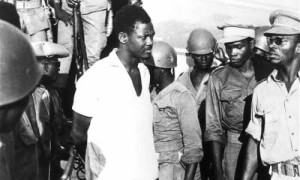
Lumumba and his companions were taken to Leopoldville, where they were subjected to repeated beatings. Photos and reports of this came in the Western press. UN Secretary-General, Dag Hammarskjold demanded that the government of Bomboko provide humane treatment of prisoners. Meanwhile, the forces led by Antoine Gizenga won military successes in the east. The Tshombe government appealed to the UN.
By mid-January, loyal Lumumba forces controlled half the country. The CIA station chief Lawrence Devlin, predicted imminent political chaos and the return to power of Lumumba. The Belgian Minister for African Affairs, d’Asprimon Linden, telegraphed Colonel Marley, ‘To prevent the release of Lumumba at any cost.’ Lumumba and his companions were placed in a military camp at Ardi, 150 kilometres from the capital.
It was here that Lumumba’s fate almost took a new twist. The camp broke and there was another soldier rebellion. The soldiers demanded a salary raise and release to freedom of Lumumba. The reports of mutiny plunged Leopoldville into panic. Rumors spread that Lumumba was released and was marching at the head of the rebel soldiers to the capital. The white population of the city hastily evacuated to the other side of the Congo River, in Brazzavill.
The rumours proved to be false, but acted effectively. On January 13th. at Leopoldville arrived President Kasavubu, Colonel Mobutu, Senate President Joseph Ileo and several other senior officials. They offered captive portfolio of any minister in the cabinet of Ileo. Lumumba refused, he considered himself the only legitimate head of government. A few days before his death, he wrote a farewell letter to Pauline Lumumba. Even in this, his last work, he could not find words befitting the moment, it consists entirely of the curses of the colonialists and their puppets and the prophecies of the imminent triumph of justice.
On the morning of January 14th. Kasavubu convened a meeting of the self-proclaimed government and decided what to do with Lumumba. The members of the Emergency Committee of the Congolese in any case did not want to bathe one’s hands in blood, in connection with which Colonel Marley even named Colonel Mobutu, Pontius Pilate. In the province of South Kasai, the leader vowed retaliation for the August massacre and to make a vase from the skull of Lumumba. Then there was an option, place Lumumba in Katanga, but Tshombe, valuing its international image, resisted. His stubbornness was broken by telegram from Brussels to the Belgian Minister for Africa, Earl d’Asprimona Linden. He demanded to take Lumumba. The next day an aircraft, a DC-4 airlines Air Congo with mixed Franco-Belgian-Australian crew headed for Elizabetville. There were three prisoners besides Lumumba; former Minister of Youth and Sports, Maurice Mpolo and former vice-president of the Senate, Joseph Okito. The convoy consisted of soldiers of the Baluba tribe. Throughout the flight, they brutally beat the prisoners, revitalising their strength by drinking whiskey.
The pilot initially tried to bring order, but then locked himself in the cockpit, desiring only of one thing, to deliver all passengers alive to the destination. Indeed they survived, but they were to live less than a day. ‘Welcome to the free Katanga’ was the inscription that Lumuba saw at the airport inscription, depicted in French, English and Swahili.
Authenticity around the circumstances of the death of Patrice Lumumba have long remained a mystery. Even the exact date of the execution was unknown. It was only in 1999, that the Dutch journalist Ludo de Witte, published a book, ‘Murder of Lumumba,’ which restored to the imagination the remaining hours of life of the Congolese prime minister. On arrival at Elizabetville, on the way from the airport to the city, Luano guards stopped the car in the open field and told the prisoners to go. They had an opportunity to pray, from which Lumumba refused. The corpses of the executed were buried in a common grave, but then in order to avoid any investigations they were unearthed, cut into pieces and dissolved in a vat of sulphuric acid. One of the participants in this last operation, the Belgian, Gerard Soet, after his name became known through the book by de Witte, said in an interview with Belgian television that there were two gold crowns that he took from the upper jaw of Lumumba, then he threw them into the sea.
Following the destruction of traces of the crime, there was a requirement to create an ‘official version’ of what happened. Consequently, on February 10th. Radio Katanga reported that Lumumba and his companion, Mpolo Okito had escaped from prison. On February 13th. the Interior Minister, Godefroid Munongo told the conference that Lumumba had been killed while fleeing and so by the inhabitants of ‘some villages’ and was already buried. The Minister refused to name the village or even tribal affiliation of its inhabitants, so as not to bring them revenge via devotees of Lumumba. ‘I speak frankly and openly, as I always do,’ voiced Munongo. ‘We surely be accused of killing them. My answer is, prove it.’
Upon learning of the death of Lumumba, American resident Lawrence Devlin threw into the river Congo the toothpaste and the other poisoned items which were intended for the assassination of the former prime minister.
.
Now we can focus upon the atrocious and wider issues that are pertinent.
(C-V)
The access to knowledge and our control of knowledge does reside at the heart of our role, not only with regard to the clandestine, but what could quickly pass us by, should we so allow.
.
(c) 2016
.
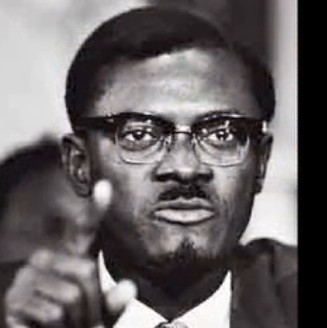
Patrice Lumumba
.
Secret Intelligence Service
Adversitate. Custodi. Per Verum